This is entirely hypothetical and based on OSINT. See the end for references
I want to tell you about a ship.
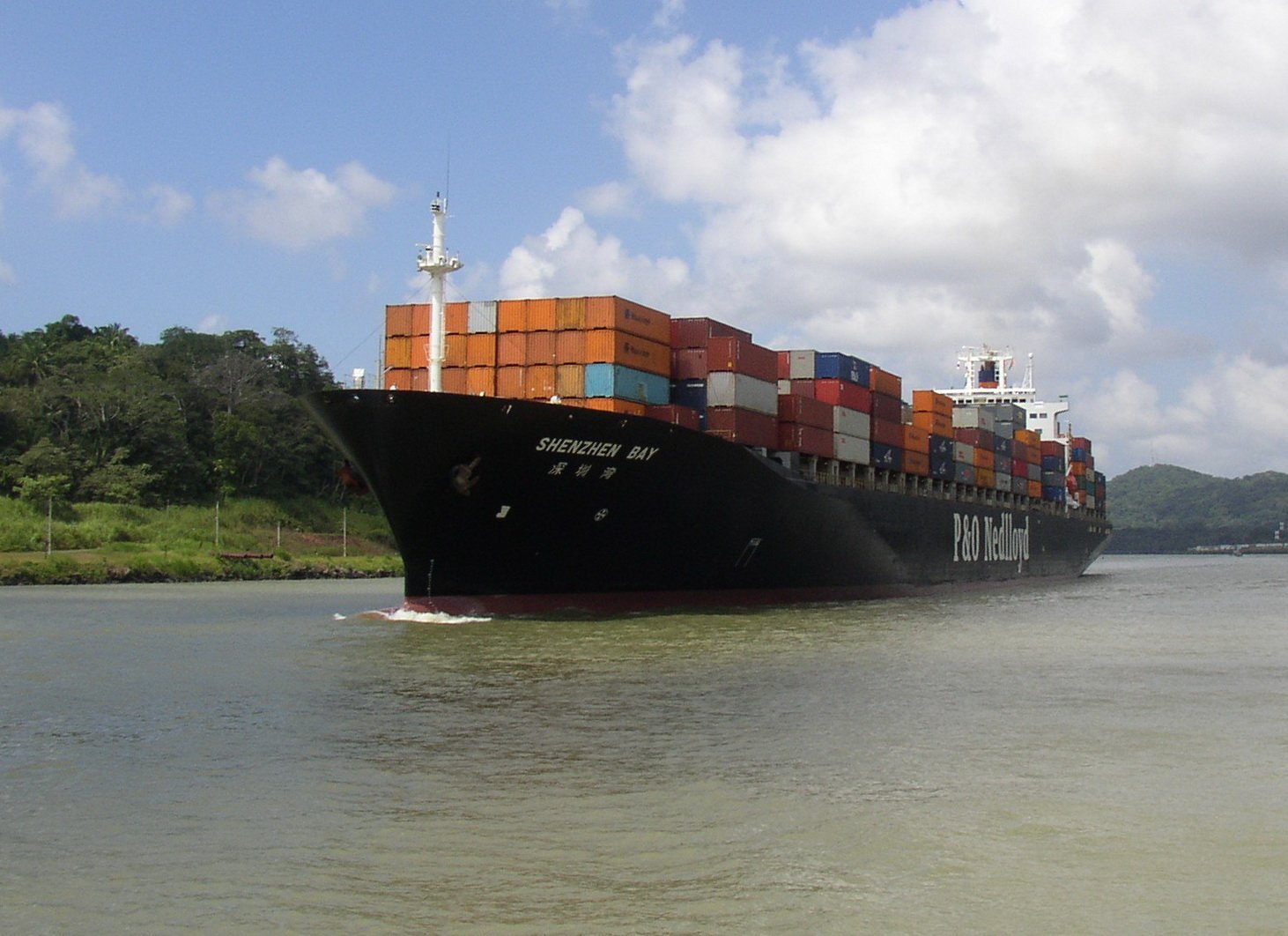
It left port several weeks ago. Nothing remarkable about it — a Panamax bulk carrier, registered under a flag you’ve never heard of, operated by a company that exists as three shell entities across two jurisdictions, manifesting general cargo. It has been logged, tracked, and passed over by every automated system designed to notice things that should be noticed. It is, by every metric available to the agencies whose job it is to know otherwise, an ordinary vessel making an ordinary transit.
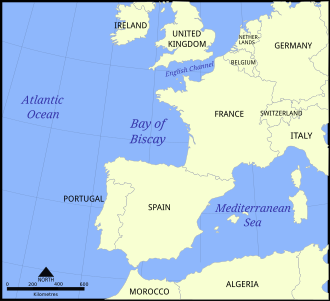
It is in the Bay of Biscay right now.
I’m going to explain what happens next. Not as a hypothetical. As a sequence of events that requires no technology that doesn’t exist, no capability that hasn’t been publicly demonstrated, and no gap in British defences that hasn’t already been described — in the first piece, The Ditherer’s Dividend — in broad terms.
This piece is the close-up.
The thing that should disturb you most isn’t how the attack could playout. It’s what happens after it. It’s the silence where accountability should be.
What’s in the Boxes
A standard Panamax containership carries containers stacked above deck in bays, typically ten to fourteen across, four to six high. From any aerial or satellite perspective — and there will be one, somewhere in the 6–12 hour revisit cycle that covers this part of the Atlantic — it is indistinguishable from ten thousand other vessels transiting the same waters today.
The concealment architecture doesn’t require exotic engineering. It requires twist locks.
Quick-release ISO twist locks are standard marine fitting hardware. Every port chandler in the world stocks them. They are used to secure containers to deck fittings and to each other. They release with a single lever action. Our vessel has modified the outer perimeter stacks — perhaps eighty to a hundred standard 40ft ISO boxes — to release as clusters. They are empty, or ballasted with scrap steel for plausibility on a weight manifest. They can be over the side in under fifteen minutes by a deck crew that has rehearsed the sequence.
Behind those outer stacks sit the launcher containers.
Iran demonstrated this architecture publicly in February 2024. The IRGC vessel Shahid Mahdavi — a converted container ship — successfully launched Fateh-class ballistic missiles from the Gulf of Oman. The launchers were visually indistinguishable from standard cargo containers until the roof panels opened. The Iranian military filmed it and published the footage. It is not a secret. It is a doctrine.
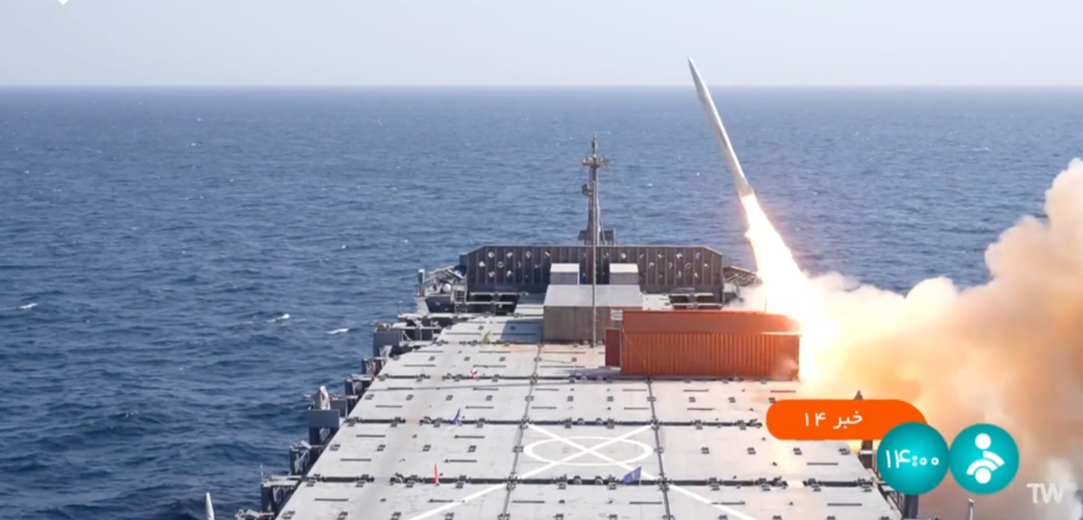
What the published footage showed was a single vessel, one or two systems, controlled conditions. What the doctrine enables, at scale, on a purpose-configured hull with a full magazine, is something different.
On our vessel in Biscay, behind the quick-release perimeter stacks, there are approximately forty to fifty launch positions. Some carry Noor cruise missiles — Iranian-manufactured C-802 derivatives, sea-skimming, radar-guided, 170kg warheads, the weapons that nearly sank the Israeli corvette Hanit in 2006. Some carry Ya Ali or Soumar cruise missiles, turbojet-powered, terrain-following, with ranges of 700 to 1,350 kilometres. Some carry Fateh-110 or Zolfaghar short-range ballistic missiles — solid fuel, 300 to 700 kilometres range, with terminal CEP on later variants approaching ten metres.
London is approximately 1,000 kilometres from the mid-Bay of Biscay. Bristol is 600. Plymouth is 400.
The launcher containers have reinforced deck plating beneath them — indistinguishable from structural modification for heavy machinery cargo, routine on any Lloyd’s survey. The blast deflectors are below deck level, invisible externally. The fire control bus runs through the container stack like electrical conduit. The INS receivers are disguised as navigation equipment. Each element, inspected in isolation, is entirely legitimate. The system, assembled, is a land-attack battery.
It has been assembled at sea, over three days, in international waters, by people whose passports and job titles are entirely in order.
The Window
It is Tuesday morning. The weather is unremarkable. AIS shows a routine transit. Nothing has changed on the 0600 satellite pass.
At 0847, the deck crew begins releasing the outer stacks.
T+0:00 — Quick-release levers operated in sequence. Clusters of four to six containers are pushed to the rail. They go over the side. They sink. They are in 3,000 metres of water inside two minutes. The satellite won’t pass again for six hours.
T+12:00 — Launcher container roof panels fold back. Fire control is hot. INS solutions have been running for seventy-two hours.
T+18:00 — First salvo. Cruise missiles, ripple-fired. Sixteen to twenty rounds in four to six minutes. Sea-skimming, radar-guided, below the detection horizon of any shore-based system until they are minutes from impact.
T+28:00 — Ballistic salvo. Eight to twelve Fateh/Zolfaghar. Solid fuel ignition. Vertical launch. These are not sea-skimming. These are in a ballistic arc inside thirty seconds. They will arrive before the cruise missiles.
T+38:00 — Remaining cruise battery. Anti-radiation variants if radar installations are the target. Second wave if urban infrastructure is the target.
The ballistic rounds are inbound to London in six to eight minutes from launch. They land at approximately T+36:00 — before the last cruise missile has even left its tube.
Total launch window: under forty minutes.
Now consider what is available to intercept any of this.
The Royal Navy has six Type 45 destroyers. On the morning our vessel begins releasing its outer stacks, one is in Devonport in a maintenance cycle. It is 72 to 96 hours from combat-ready sortie. One is at Faslane — wrong part of the ocean, wrong coast, 36 to 48 hours from the threat axis even if she put to sea immediately. The remaining four are variously deployed, working up, or in refit.
Aster-30 coverage of the Bay of Biscay: zero. It’s possible we might get lucky (not an acceptable defence strategy) and a French Horizon class destroyer might be transiting Biscay just at this moment, or the Spanish might have deployed a Patriot PAC-3 on their Northern coast for a drill but even with those present they would both need (a) delegated authority to launch, (b) the pretty much empty their magazines to be helpful and to (c) react almost instantly.
Sky Sabre, Britain’s land-based air defence system, has an engagement range of approximately 25 kilometres. The cruise missiles will be over Devon before they enter that envelope. Sky Sabre is not a ballistic missile defence system. It cannot engage the Fateh rounds at all.
The UK has no THAAD. No Patriot PAC-3 (unlike the Spanish). No Aegis Ashore. No over-the-horizon radar covering the southwest approaches (as far as OSINT tells me).
Fylingdales — the ballistic missile early warning station in North Yorkshire — is oriented northeast. It was designed and positioned to detect Soviet ICBMs inbound across the Arctic. It is not optimised for a ballistic launch from due south at short range.
There is no intercept.
There is no coverage.
There is no system, operational, funded, or deployed, that addresses this attack as it is happening.
The first anyone in government will know with certainty is impact.
The Exit
This is the part that matters most for what comes after.
The crew of our enemy vessel numbers around twenty. This is entirely consistent with a merchant vessel of this class. The cook is the cook. The able seamen are able seamen. Until thirty-eight minutes ago, that was all they were, on paper, and it may remain true of several of them — a cell structure does not require every crew member to know what they are part of.
Six to eight operationally critical personnel transfer to an inflatable. The inflatable reaches a Ghadir-class midget submarine that has been at periscope depth three kilometres off the beam since 0300. The Ghadir-class displaces approximately 120 tonnes. It was transported to the eastern Atlantic on a semi-submersible heavy-lift vessel and slipped quietly over the side weeks ago, or it transited on its own keel via the GIUK gap. Either is within its documented capability.
Personnel transfer: fifteen to twenty minutes.
Meanwhile, the scuttling charges — pre-placed along the keel during the three-day preparation window — are initiated. Kingstons opened. On a vessel of this size, with properly placed charges and open sea cocks, you have twenty to twenty-five minutes before she’s going down. A fire starts simultaneously in the bridge and the accommodation block. The fire control system — the one piece of equipment that is unambiguously military in nature — burns on a thermite charge triggered at the same moment.
T+90:00 — The submarine is at depth and withdrawing. The vessel is on the bottom of the Bay of Biscay in 3,000 metres of water. The outer stacks are on the seabed in a dispersed pattern across a two-kilometre radius. The crew manifest shows twenty-three people. The inflatable is not recoverable.
What is on the surface is debris consistent with a marine casualty. Fire damage. Structural failure. An Coastguard incident report.
The forensic investigation will take weeks. The ROV survey, when it eventually reaches the wreck, will find structural reinforcement that is anomalous but not conclusive. It will find melted electronics — thermite is thorough. It may find fragments of Iranian-manufactured components. Iran will attribute them to black market proliferation to non-state actors with whom they have no operational relationship.
The attribution chain required to invoke Article 5 — to treat this as an act of war requiring collective NATO response — is not there. Not immediately. Perhaps not for months. Perhaps not at a confidence level that survives a Security Council veto.
This is not an accident of forensics. The deniability was designed in. The weapon system and the exit architecture were conceived together, as a unit, precisely to occupy the space between an act of war and a tragedy of uncertain origin.
Salisbury showed us that space exists and can be exploited. Salisbury was a two-person team with a nerve agent and a perfume bottle. This is the same doctrine at a different order of magnitude — and we have no more ability to prevent it at scale than we had to prevent it then.
The Saving Grace
There is one scenario in which some portion of this salvo might be intercepted.
One, I mentioned it briefly above.
The French Navy operates two Horizon-class air defence destroyers — Forbin and Chevalier Paul — fitted with the same PAAMS/Aster-30 system as the Type 45. Same principal anti-air missile system. Same EMPAR multifunction radar. In pure capability terms, a Horizon in the right place is exactly what a British destroyer should be doing in British home waters, and isn’t.
If one of them happened to be transiting northbound through the Bay of Biscay that morning — returning from a Mediterranean deployment, perhaps, or routing from Toulon to Brest — and if her position placed her in the northern Bay, perhaps 47°N, somewhere off the Brittany coast, she would be inside the geometric window to intercept.
Against the ballistic salvo, she is looking at a mid-course intercept opportunity of perhaps ninety to a hundred and fifty seconds. The window opens around T+4:00 after launch and closes by T+7:00. Against the cruise salvo, she has better time and geometry — but faces a saturation problem. A Horizon carries thirty-two Aster missiles in total. Against sixteen to twenty cruise rounds plus eight to twelve ballistic, she is shooting most of her magazine, and she will not kill everything.
But the geometry is the least of it.
For that intercept to happen, the following chain has to execute without a single point of friction inside five minutes:
American SBIRS detects the ballistic launches at T+0:30 and passes data to NORAD.
NORAD computes trajectories and routes the alert to NATO’s Combined Air Operations Centre at Torrejon by T+3:00.
Torrejon identifies the French asset, raises her on secure communications, and passes firing data by T+4:00.
The Horizon‘s commanding officer receives, authenticates, and makes an engagement decision by T+5:00. Missiles away by T+6:00. Intercept attempt at T+7:00.
Under peacetime rules of engagement, a French naval commanding officer would not usually have pre-delegated authority to engage ballistic missiles in flight over international waters toward a NATO ally. That call goes to Paris. Paris to the Élysée duty officer. Authorisation back down the chain. In a crisis that began less than five minutes ago, from a threat that has never happened before, against a target that is already on a terminal trajectory toward London.
That authorisation chain, realistically, takes longer than the window allows.
Unless Paris has updated its standing orders in response to the current threat environment — possible, given what has happened to British installations since March 2026 — the political decision latency defeats the geometric opportunity. The Horizon watches the tracks on her combat management system and cannot fire.
And this — one allied ship, on the right transit, on the right morning, dependent on a command chain executing perfectly in minutes it probably doesn’t have — is what passes, in the complete absence of any British area air defence presence in our own western approaches, for a saving grace.
Have a think about that and let that hope settle on the sea bed.
The Risk Assessment That Was Filed
Here is the thing I really want you to understand about this.
None of the analysis in this piece — or in The Ditherer’s Dividend before it — is derived from classified sources. It is assembled from open literature: Jane’s, IISS, RUSI publications, Iranian state media, US Congressional testimony, Lloyd’s market data, and the publicly available specifications of weapon systems that Iran has demonstrated on camera and published footage of.
Which means that every defence analyst in Whitehall has access to the same information. Every senior officer at Northwood. Every desk officer at GCHQ or DI who covers Iranian capabilities and maritime threat assessment.
The gap described here — the Bay of Biscay window, the absence of area air defence, the forensic architecture of a containerised launch and clean exit — has been known, or knowable, for years. The Shahid Mahdavi demonstration was in February 2024. The containerised launch concept has been discussed in open defence literature since at least 2011. The IRGC’s grey-fleet commercial vessel doctrine has been a documented operational methodology for over a decade.
Someone in Whitehall will have written a risk assessment. It will have used more cautious language than this piece. It will have hedged its probability estimates and its capability attributions and its consequence projections. It will have been marked appropriately, routed to the appropriate committees, and discussed at the appropriate level.
And then the Type 45 fleet stayed at six hulls, operationally available at two on a good day. The Patriot procurement conversation went nowhere. The Sky Sabre batteries remained at three. The southwest approaches remained uncovered.
The negligence described in The Ditherer’s Dividend is not the negligence of ignorance. It is not a failure of intelligence or analysis. It is the negligence of informed acceptance — of a risk, understood in detail, accepted on behalf of a public that was never shown the detail, because the detail is uncomfortable and the money was needed elsewhere and the threat was always, until it isn’t, theoretical.
The ship in Biscay is theoretical.
Right up until it isn’t.
OSINT Reference: Verify This Yourself
The following open sources support the factual claims in this piece. Nothing here requires a library card.
Iranian Containerised Launch Capability
IRGC Shahid Mahdavi demonstration footage, February 2024 — widely reported by Reuters, AP, and archived at IRGC official channels. Search: “Shahid Mahdavi container missile launch 2024”
Fateh-110 / Zolfaghar specifications: IISS Military Balance 2024; Jane’s Missiles & Rockets database (subscription, but summaries freely reported)
Noor / C-802 lineage and Hanit strike, 2006: US Naval Institute Proceedings; Jane’s Naval Weapon Systems
Type 45 Operational Availability
House of Commons Defence Committee reports on Type 45 readiness, 2017–2024 (freely available at parliament.uk)
National Audit Office: Type 45 Destroyer — Lifetime Support, 2020
navylookout.com — independent granular tracking of RN vessel availability and refit cycles
UK Land-Based Air and Missile Defence
Sky Sabre / CAMM specifications: MBDA official documentation; UK MoD press releases
THAAD and Patriot PAC-3 unit costs: US Congressional Budget Office reports; DSCA (Defense Security Cooperation Agency) Foreign Military Sale notifications — all publicly archived
IISS: Military Balance 2024 — comparative NATO air defence inventories
Interceptor Consumption Rates
June 2025 Iran-Israel conflict THAAD expenditure: reported by Breaking Defense, Defense News, and Reuters from US DoD briefings
Patriot consumption rates: US Congressional testimony, 2024–2026, available via congress.gov
Ghadir-Class Submarine
Specifications and range: IISS; US Naval Institute; Federation of American Scientists (fas.org)
Semi-submersible heavy-lift deployment doctrine: open academic literature on IRGC naval asymmetric warfare
Maritime Law and Attribution
UN Charter Article 51 text: un.org
Caroline doctrine: standard public international law reference, accessible via the Avalon Project at Yale Law School (avalon.law.yale.edu)
NATO Article 5 invocation history and threshold: NATO official documentation at nato.int
Wider Context
navylookout.com — the most reliable independent source on Royal Navy capability, no institutional axe to grind
rusi.org — RUSI published extensive open analysis on UK maritime vulnerability; search their Naval Power programme
iiss.org — Strategic Comments and Survival journal; some content open access
The author writes on UK national security, technology, and political economy.
This piece is a companion to The Ditherer’s Dividend: Why Britain Needs Destroyers, Minesweepers, and a Spine, published April 2026.