Two Kinds of Trust
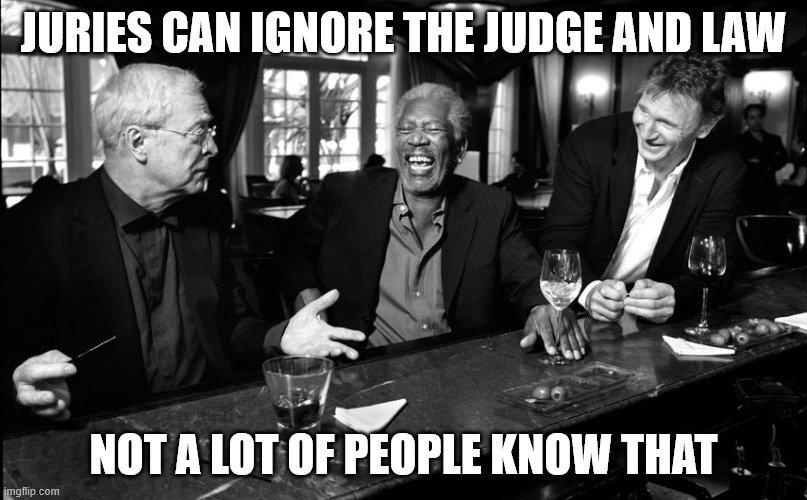
Every criminal justice system has to choose, at some level, between trusting rules and trusting people. Written law aims for consistency: the same act should attract the same consequence regardless of who commits it or who is judging. But consistency, applied without any human discretion, can produce outcomes that feel unjust even when they are technically correct. The English legal tradition has never fully resolved this tension. Instead, it has built in several points where a human being — a police officer, a prosecutor, or twelve members of the public — can simply decline to apply the letter of the law, without having to justify that decision to anyone.
Jury nullification is the most dramatic and least accountable of these points. It sits alongside, but is meaningfully different from, the discretion exercised earlier in the process by police and the Crown Prosecution Service. Understanding how these three forms of discretion interact and what currently proposed reforms to trial by jury would do to the last of them matters more than it usually gets credit for, particularly for anyone who protests, posts online, or otherwise finds themselves at the sharper end of public order and communications law.
Bushell’s Case and the Birth of an Unwritten Power
Jury nullification is not a right written into statute. No Act of Parliament grants it, and no judge is permitted to instruct a jury that it event exists! It survives purely because of two structural facts about the English jury system:
a jury does not have to give reasons for its verdict, and
an acquittal cannot be appealed by the prosecution or reversed by a judge — protections against double jeopardy that, with a small number of narrow modern exceptions, remain intact.
The foundational case is Bushell’s Case (1670). A jury refused to convict the Quaker preacher William Penn under a law criminalising unauthorised religious assembly, despite the judge’s clear direction that the law had been broken. The judge tried to punish the jurors — fining them and imprisoning the foreman, Edward Bushell, for refusing to convict. On appeal, the court ruled that jurors could not be punished for the verdict they reached, however much a judge disagreed with it.
That ruling didn’t create a legal doctrine of nullification so much as it made nullification unstoppable in practice: if a jury cannot be punished, and a verdict cannot be appealed, then a jury’s decision to disregard the letter of the law — for reasons of conscience — cannot be undone.
Should someone be imprisoned for 2 years for throwing an empty plastic bottle towards riot police? Guess what? The Jury could have just refused to convict him on the basis that they didn’t agree the law was being used properly. In-fact they wouldn’t even need to say why. They could have just said “We disagree with the Judge and CPS and find the defendant not guilt on all counts.” and the Judge, CPS, Home Office and the rest of them would have to suck it up.
This cuts both ways as we have seen in some cases where juries have let off people very unexpectedly.
This principle is sometimes referred to today as “jury equity,” and it has its own plaque inside the Old Bailey, commemorating the right of juries to give their verdict according to their convictions.
Modern Precedent: Ponting, Shell, and the Colston Four
The most cited twentieth-century example is the 1985 trial of civil servant Clive Ponting, prosecuted under the Official Secrets Act after leaking documents relating to the sinking of the General Belgrano during the Falklands War. Despite judicial directions that appeared to favour conviction, the jury acquitted him — widely read at the time as a jury rejecting what it saw as a politically motivated prosecution rather than disputing the facts.
More recent examples cluster around environmental protest. In 2019, seven Extinction Rebellion activists caused roughly £25,000 of damage to Shell’s London headquarters. The trial judge told the jury the defendants had no defence in law, yet jurors acquitted them anyway — a case now widely discussed by legal academics as a textbook instance of a jury “going rogue” against explicit judicial direction.
The best-known recent case is the “Colston Four” trial in 2022. Four defendants admitted pulling down the statue of slave trader Edward Colston in Bristol during a 2020 Black Lives Matter protest and rolling it into the harbour, and were charged with criminal damage. All four were acquitted by jury after an eleven-day trial. The trial judge gave the jury several routes to acquittal, including the possibility that a conviction would represent a disproportionate interference with the defendants’ right to freedom of expression.
Reaction split sharply along political lines: then-Attorney General Suella Braverman said she was considering referring the case to the Court of Appeal to clarify a point of law, and senior government figures, including a former justice secretary, called the verdict “perverse.” Legal commentators pushed back firmly, noting that a jury verdict is not a legal precedent and cannot bind future cases — it simply reflects what one particular jury, on one particular set of facts, decided it could not in conscience convict on.
As I said, this cuts both ways which is probably why the establishment has instructed Judges not to mention it to juries.
The Same Impulse, Contested by the Judiciary
What’s changed more recently is that judges themselves have started actively trying to prevent nullification from happening — which tells you something about how seriously the judiciary now takes the risk. In Just Stop Oil and Insulate Britain trials, judges have increasingly barred defendants from mentioning climate change, fuel poverty, or their underlying motivations in front of the jury, on the basis that such testimony might invite the jury to acquit on conscience rather than law. One Inner London Crown Court judge, Silas Reid, reportedly jailed a defendant for using the words “climate crisis” and “fuel poverty” after banning those terms from his courtroom, and warned juries that returning a verdict based on anything other than the evidence would itself be a criminal offence — a warning that campaigners argue directly contradicts the Bushell’s Case principle.
Of course we are living in a free democracy with a benevolent state. Right?
That same judge ordered the arrest of retired social worker Trudi Warner in March 2023 after she stood outside Inner London Crown Court holding a handwritten sign stating, in essence, that jurors have an absolute right to acquit according to their conscience — wording drawn directly from the Old Bailey plaque. The Solicitor General sought the High Court’s permission to bring contempt of court proceedings against her, on the basis that she had attempted to interfere with the administration of justice. The High Court dismissed the case, ruling that a criminal prosecution was a disproportionate response in a democratic society. Warner’s protest has since been replicated by dozens of people outside courts across the country under the banner “Defend Our Juries,” several of whom have also been referred to the Attorney General for contempt.
This episode captures the tension precisely: stating a long-established, judicially recognised legal principle, unprompted and outside a specific jury’s presence, was treated by the state as serious enough to warrant contempt proceedings — even though the High Court ultimately found it wasn’t.
That a government minister thought it worth pursuing at all suggests real institutional discomfort with nullification’s visibility, whatever the formal legal status of the principle itself.
The Other Kind of Discretion: Police and the CPS
It’s worth being precise about where jury nullification sits relative to two other well-established discretion points, because the instinct to link them is basically right, even though they operate quite differently.
Police officers in England and Wales are under no general statutory duty to arrest or to pursue every reported offence. Operational decisions about who to stop, question, or arrest are matters of individual and force-level discretion, guided by codes of practice but not compelled case-by-case by statute. This means police effectively make thousands of small, largely unreviewable decisions every day about which technical breaches of the law will actually be enforced.
The Crown Prosecution Service applies a more formal, two-stage test before charging anyone: the evidential stage (is there a realistic prospect of conviction) and the public interest stage (is prosecution actually in the public interest, considering factors like the seriousness of the offence, the impact on the victim, and the age and circumstances of the suspect). This is, by design, a discretionary judgment — and it has occasionally (and in growing volume) attracted accusations of inconsistency or political sensitivity in how it’s applied, particularly around high-profile protest, public order, and speech-related cases, where charging decisions on similar facts have sometimes appeared to diverge depending on which side of a political controversy the defendant sits on. These allegations are contested and rarely proven in any legally cognisable sense, but the perception itself has become part of the public debate about trust in prosecutorial discretion.
The key structural difference from jury nullification is this: police and CPS discretion happens before a jury ever sees a case, is nominally guided by published tests and codes, and — for the CPS at least — can in principle be judicially reviewed. Jury nullification happens after all of that, is entirely unreviewable, requires no justification, and cannot be appealed. It is the final, and most opaque, point at which the letter of the law can be overridden by a human judgment that a prosecution shouldn’t succeed.
Where the Current Reforms Bite
That brings us to Labors great mastermind. David Lammy. I jest obviously he’s about as cunning as a brick. However that brings us to the jury trial reforms currently working through Parliament under Justice Secretary David Lammy whose core proposal would abolish the automatic right to jury trial for offences likely to attract a sentence of three years or less, moving those cases to new judge-only “swift courts,” alongside expanded magistrates’ sentencing powers.
The stated rationale throughout — repeated in Hansard debates and government statements — is a criminal court backlog that has grown to roughly 78,000–80,000 cases, is projected to reach 100,000 by 2028, and leaves some hearings listed as far out as 2030. The proposals substantially track the independent review conducted by Sir Brian Leveson.
The scale of the change is significant: per the Institute for Government, only around 3% of defendants currently eligible to elect a jury trial would retain that right once the reforms take effect. As many as 90 Labour backbench MPs have reportedly threatened rebellion against the bill, and it has drawn criticism that transcends party lines, including from past and present Labour Welsh Government law officers who have called the proposal extreme.
Here is where the underlying concern becomes structurally well-founded, independent of anyone’s intent: most protest-related offences — criminal damage, aggravated trespass, obstruction of the highway, public nuisance — and most communications offences, carry maximum or typical sentences well under three years.
That means a large share of exactly the cases where nullification has been most visibly exercised in the last decade — the Colston Four, the Shell protesters, Just Stop Oil and Insulate Britain defendants — would, under the new threshold, be routed to judge-only trial, removing the jury and with it the nullification option entirely.
The communications-offence numbers reinforce this indirectly, even though a headline figure of tens of thousands of convictions at one-to-three-year sentences doesn’t hold up under scrutiny. Widely cited totals of roughly 62,000–65,000 trace to arrests, not convictions or sentences — reporting based on Freedom of Information (FOI) requests and a Big Brother Watch report both show cumulative arrests for online communications offences in the tens of thousands over several years, with only a small fraction leading to charge or conviction, and custodial sentences for those convicted are typically far shorter than a year. Which is still abhorrent if you believe most speech should be protected. But volume matters here regardless of individual sentence length: a very large pool of low-level, often politically or socially charged cases — school WhatsApp groups, contested social media posts, protest-adjacent speech — currently sits well within the sentencing band the reform targets for removal from jury trial.
Separately, and worth flagging on its own, the government’s Crime and Policing Bill also proposes a new offence of “concealing identity at protests,” which would let a senior police officer designate a temporary no-mask zone at a demonstration, with arrest available immediately for anyone wearing a face covering inside it — a proposal first raised under the previous Conservative government and now being carried forward by Labour. Existing Section 60AA powers under the Criminal Justice and Public Order Act 1994 already allow police to require removal of face coverings at authorised protests, and have already been used, including at Palestine solidarity demonstrations, with prosecutions sometimes collapsing on evidential grounds — in one case a charge against a protester wearing a scarf was dismissed because the arresting officer hadn’t actually established the covering was intended to conceal identity. A more expansive future offence of this kind would sit squarely in the sub-three-year sentencing band the jury reforms are removing from jury oversight.
Holding the Balance
None of this proves the jury trial reforms were designed to suppress protest acquittals or curb nullification in speech-related cases. That’s an important distinction to hold onto, and it’s worth resisting the pull toward it even where the pattern feels suggestive but it’s equally very important we all keep an eye on what happens next. A few counterpoints deserve real weight.
● The three-year sentencing threshold sweeps in an enormous range of ordinary criminal offending — theft, assault, fraud, burglary — that has nothing to do with protest or political speech. The overwhelming majority of defendants losing jury trial rights under this reform are not activists.
● The stated and consistently repeated justification, across Hansard debates, ministerial statements, and the Leveson review itself, is court backlog and case-processing efficiency, not protest suppression. Critics of the bill — including many Labour MPs — have framed their objection primarily around the loss of a historic constitutional check on state power in general, not as an attack on activists specifically.
● Nullification has never been ideologically one-directional. It has been used across the political spectrum, in cases with no connection to left-coded protest movements, precisely because it reflects whatever a particular jury’s conscience responds to on a given set of facts. A structural narrowing of jury trial availability reduces that safety valve for everyone equally, not selectively for one political tendency — even if the practical effect, given current caseloads, happens to fall disproportionately on protest and speech offences right now.
What can fairly be said is this: there is a long-standing, judicially uncomfortable, largely unwritten mechanism by which ordinary citizens can refuse to enforce a law they consider unjustly applied — one significant enough that a government minister has pursued contempt proceedings against a pensioner for describing it accurately on a placard. As institutional trust erodes and prosecutions touching on protest and online speech increase in volume, that mechanism becomes more, not less, relevant. And a reform justified entirely in terms of court efficiency will, as a side effect regardless of intent, remove jury oversight from precisely the category of case in which nullification has most visibly been exercised in the last five years. Whether that is a cost worth accepting for a faster court system, or a serious and insufficiently scrutinised erosion of a centuries-old check on the state, is exactly the judgment the current parliamentary debate is trying, imperfectly, to make.
A Possible Amendment: Improving the Bill Rather Than Opposing It
If the aim is to preserve jury oversight specifically where nullification has mattered most, without reopening the entire backlog debate, a narrowly targeted amendment is more likely to survive scrutiny than a broad “peaceful protest” carve-out. A carve-out defined by protest status or the political character of the speech involved creates its own problem: it requires someone — police, CPS, or a judge at an early hearing — to classify a case as protest-related or speech-related before trial, which simply relocates the discretion problem rather than resolving it, and risks becoming a de facto political-content test in its own right. Courts already distinguish violent from non-violent conduct fairly consistently within existing offence definitions, so “peaceful” is unlikely to add a clean, litigation-proof line.
A more precedent-friendly version would instead exempt specific, named offences from the three-year threshold outright, regardless of who commits them or why. Candidates would include aggravated trespass, public nuisance arising from protest-type conduct, obstruction of the highway, and the communications offences under Section 127 of the Communications Act 2003 and the Malicious Communications Act 1988. Because the exemption would attach to the offence itself rather than to a judgment about the defendant’s motive or the peacefulness of their conduct, it would preserve jury trial — and with it the nullification safety valve — for exactly the offence categories where it has been exercised in recent protest and speech cases, without requiring any new classification step, and without giving any one political tendency a bespoke protection that a future Parliament could accuse of favouritism.
This approach also sits more comfortably within the bill’s own stated logic. Because it targets specific offences rather than carving out an entire category of defendant, it leaves the sentencing-threshold model intact for the vast bulk of ordinary criminal offending the reform is aimed at, while addressing the narrower, evidence-based concern that a small number of offence types account for a disproportionate share of the jury trials in which conscience-based acquittals have occurred. That framing — protecting specific offences with a documented history of jury equity, not protecting a class of defendant — is also more likely to attract cross-party support, since it can be defended on constitutional and evidentiary grounds rather than being read as a concession to any one protest movement.